Tuesday, January 25, 2011

Architecture Assignment


Location 1: Big Picture
Location: El Camino del Mar
San Francisco


Location 2: Detail
Location: American Cupcake
 Union Street, San Francisco


Location 3: Big Picture
Location: Legion of Honor
San Francisco


Location 3: Detail
Location: Legion of Honor
San Francisco


Location 3: Interior
Location: Legion of Honor
San Francisco

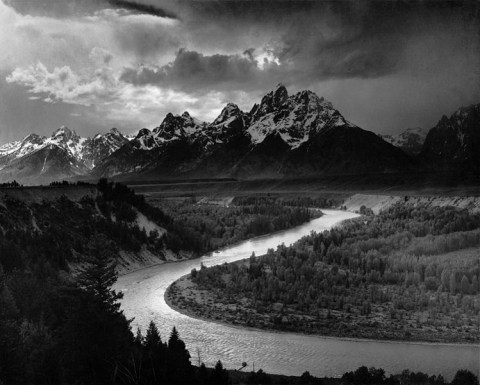
ANSEL ADAMS

Ansel Adams (February 20, 1902 - April 22, 1984)

  • was an American environmentalist
  • famous for his black and white photos of the American west and Yosemite
  • developed the Zone System with Fred Archer to determine proper exposure and adjust contrast on a final print. 

Artistic elements and principles: value, unity in the snow, rule of thirds with the clouds, texture of snow and mountains. 


Notes pgs.202-217

CHAPTER 9: LANDSCAPES
LANDMARKS IN LANDSCAPE PHOTOGRAPHY
  • photography invented in 1839. 
  • photographers looked to landscape paintings and the land for inspiration. 
  • Carleton E. Walkins
    • learned photography in 1854
    • opened up his own gallery in San Francisco
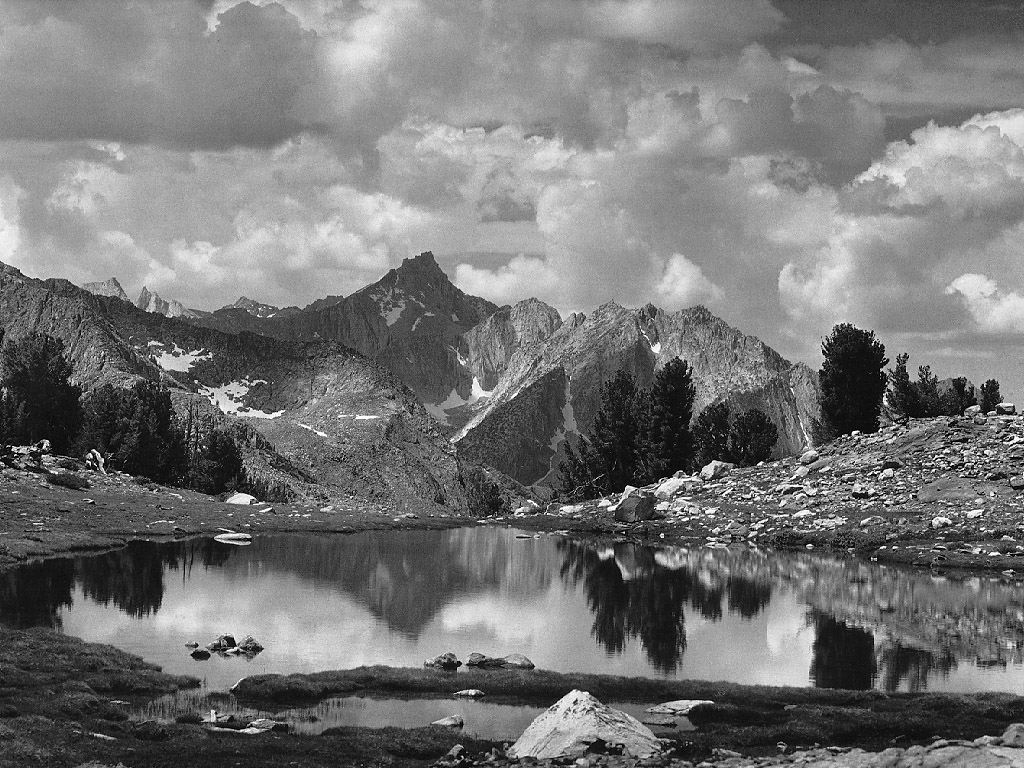
    • took pictures of Yosemite, which became famous and one of the first to be made art
  • Ansel Adams
    • mostly took pictures of Yosemite 
    • took some of the best known photos taken there
    • tried to capture the experience of being in the wilderness
PHOTOGRAPHING THE LANDSCAPE
Thinking Artistically
  • composition and viewpoint very important
  • explore different angles
  • pay attention to value and how it ties in with the mood you want for a photo
  • achieve balance between unity and variety
Camera Settings
  • small f-stops and slow shutter speeds
  • tripod for shape images
Light
  • just after sunrise and just before sunset are best times to take pictures
    • emphasizes shapes and textures
    • warm, gold color
  • easier to deal with direct lighting for distant subjects that it is for closer ones
    • captures highlights and shadows
    • gives 3-D effect
  • overcast days better for close up shots
Film
  • ISO 100 to capture a lot of detail
  • black & white vs. color
Lenses
  • wide-angle lenses to capture more of the scene
    • allows you to include close object with distant objects on one shot
  • telephoto lenses
    • for mountains/range of mountains
    • helps capture objects you cannot physically get close to
  • macro lenses
    • useful for getting really up close
    • detail and small objects
Filters
  • yellow filters bring out clouds
  • red filter - blackest skies and whitest clouds
THE GRAND LANDSCAPE
  • the "big view" for pictures of the great outdoors
  • wide-open and shows the beauty of the natural world
  • do not always have to pick "pretty" objects to photograph
  • sky almost always prominent in photographs

LANDSCAPE DETAILS AND CLOSE-UPS
  • imposing landscapes are more inviting and comfortable
  • parks are a good subject for detailed photos
  • direct sunlight makes it harder to get a good shot
  • cloudy/ overcast better
ABSTRACTED ELEMENTS IN THE LANDSCAPE
  • can eliminate clues that tell the viewer the context of the photo
  • composed of lines, shapes, textures, and values
  • get really close to object
  • telephoto or macro lens
  • a lot of depth of field, slow shutter speed, tripod

Tuesday, January 18, 2011

Notes pgs.190-197

ARCHITECTURE & URBAN LANDSCAPES


THE BIG VIEW

  • most architectural photos rely on the big view, the wide-angle overall view. 
    • shows the whole building
    • far away using wide-angle lens
  • perspective distortion appears as strong converging lines in a building, where sides lean toward each other than parallel in reality
    • going farther away from building lessens the distortion
  • straight on or angled?
  • shooting from the side creates a three-dimensional effect
SHADOWS
  • try capturing shadows of objects instead of the real thing
THE DETAIL SHOT
  • detailed shot features the individual architectural elements of a building's interior or exterior
  • details become indirect portraits of craftspeople who made them. 
INTERIOR VIEWS
  • can record overall shots of whole rooms
  • concentrate of the presence of the people living in them
  • depth of field important